Source Non Stick 4 Slice Sandwich Toaster for Home, Commercial, and Kitchen
Compare 30 non stick 4 slice sandwich toaster models from verified Chinese suppliers. Buyers can evaluate features like power, material, and certifications to find the right unit for household or commercial use; compare the available evidence and request quotations based on your requirements.
Key considerations
Products List





Comprehensive Sourcing Guide
Non Stick 4 Slice Sandwich Toaster Sourcing Guide
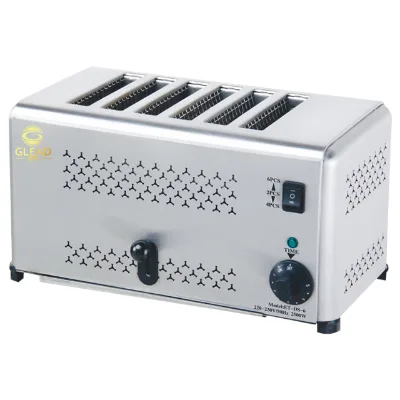
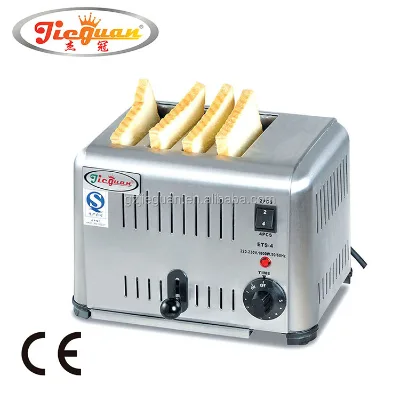
The non stick 4 slice sandwich toaster represents a versatile appliance designed for both household and commercial kitchen environments. These units typically feature interchangeable plates, such as waffle plates, allowing buyers to diversify their product offerings without changing the core housing. The observed market data indicates a strong preference for models with nonstick coatings that facilitate easy cleaning, a critical feature for high-volume food service operations.
Buyers must distinguish between models intended for general household use and those built for commercial durability. While some units are marketed for bread, pizza, and cake preparation, others focus specifically on sandwich toasting. The housing material varies significantly, ranging from durable plastic to stainless steel, which directly impacts the unit's longevity and aesthetic appeal in different retail or hospitality settings.
Product Scope and Observed Listing Signals
Listing signals reveal a wide variance in power consumption and physical dimensions across available inventory. Observed wattage ranges from 650W to 800W, with voltage specifications often aligning with 120V or 220V standards depending on the target export market. The unit sizes fluctuate considerably, with some compact models measuring around 22.7cm in width while larger commercial variants extend to nearly 37cm in height, necessitating careful space planning for retail displays.
Packing configurations also vary, with options including simple carton packing or premium gift box sets that include additional cartons. This distinction is vital for buyers targeting different distribution channels, as gift boxes often command higher margins in consumer retail, whereas bulk carton packing suits wholesale distributors. The presence of features like slide-out drip trays and specific plate sizes, such as 21.6cm by 12cm, further defines the functional scope of each listed model.
Technical Specifications to Verify
Verification of the timing device and temperature control mechanisms is essential for ensuring consistent cooking performance. Some observed models lack timing devices entirely, relying on manual operation, while others include automatic controls with integrated timers. Buyers should explicitly confirm whether a specific unit includes a temperature control device, as this feature is crucial for preventing burning and ensuring uniform browning across the four slices.
Electrical compatibility requires strict attention to voltage and power source specifications. While most units operate on standard electric power, some listings indicate dual power sources including USB connectivity, which may limit their application to portable or niche markets. The switch mechanism, often described as a plug-in type, must be verified against local electrical codes to ensure safe installation and operation in the intended destination country.
Compliance and Safety Documentation
Safety certifications are a non-negotiable requirement for importing electrical kitchen appliances into regulated markets. The observed product data lists a comprehensive suite of certifications including CE, RoHS, LFGB, EMC, LVD, ERP, and GS, which indicate adherence to European and international safety standards. Buyers must request valid test reports for these specific certifications to verify that the manufacturing batch matches the claimed compliance status before finalizing any purchase order.
Food contact safety is equally critical, particularly for appliances that directly touch bread, pizza, or cake. The presence of LFGB and EMC certifications suggests that the nonstick coatings and internal components meet strict food safety and electromagnetic compatibility requirements. Procurement teams should ensure that the supplier provides documentation proving the housing materials, whether plastic or stainless steel, are free from harmful substances and suitable for repeated heating cycles.
Cost Drivers and Commercial Terms
Minimum Order Quantities (MOQ) present a significant variable in the total cost of ownership for this product category. Observed MOQs range widely from 1 unit for sampling to 3,300 units for bulk commercial orders, with specific listings showing thresholds like 1,200 or 3,138 pieces. Buyers must align their order volume with these thresholds to avoid prohibitive per-unit costs or the inability to secure the desired model configuration.
Customization availability acts as a primary cost driver alongside standard production runs. While many suppliers offer customization options, these services often require higher MOQs and extended lead times compared to stock models. The choice between standard packaging and custom gift box packaging also influences the final landed cost, requiring buyers to calculate the trade-off between packaging aesthetics and the per-unit price increase associated with premium presentation.
Supplier Qualification and Quality Control
Supplier qualification should focus on the consistency of their production standards and the origin of their manufacturing facilities. All observed listings indicate a primary origin in Mainland China, a region known for high-volume appliance production. Buyers should verify the specific factory location and request evidence of their quality control processes to ensure that the stainless steel or plastic housing materials meet the durability expectations for commercial use.
Quality control checks must extend beyond visual inspection to include functional testing of the nonstick surfaces and electrical components. The interchangeability of plates, such as the waffle plates mentioned in the data, requires precise engineering to ensure a secure fit and even heat distribution. Buyers should implement a pre-shipment inspection protocol that specifically tests the slide-out drip trays and the reliability of the automatic control systems under simulated operating conditions.
Long-Term Procurement Checks
Long-term procurement success depends on the availability of spare parts and the durability of the nonstick coating over time. The feature set highlighting easy cleaning suggests that the coating quality is a key performance indicator, but buyers must verify the expected lifespan of this coating under high-frequency commercial use. Inconsistent coating performance can lead to premature product failure and increased warranty claims, impacting the brand reputation of the reseller.
Supply chain stability is another critical factor for maintaining consistent inventory levels. The wide range of observed MOQs and the specific model numbers like SD-137 or SF-163 indicate a fragmented market with multiple manufacturers. Buyers should establish relationships with suppliers who can guarantee consistent model availability and provide clear communication regarding lead times, ensuring that stockouts do not disrupt sales cycles in competitive retail environments.
FAQs
What certifications are available for non stick 4 slice sandwich toaster models?
Certifications include CE, RoHS, LFGB, EMC, Emf, LVD, ERP, GS, and CB. These standards ensure compliance with international safety and environmental regulations. Buyers can verify specific model documentation to confirm which certificates apply to their target markets. This helps in meeting local import requirements and ensuring product safety for end users.
Can the non stick 4 slice sandwich toaster be customized for branding?
Yes, customization is available for these units. Buyers can request specific branding or design modifications to suit their market needs. This service allows for unique product differentiation. It is important to discuss customization details with the supplier to ensure feasibility and understand any potential impact on production timelines or minimum order quantities.
What is the typical power consumption for these sandwich toasters?
Power ratings typically range from 650W to 800W. Some models operate at 750W, while others may use 650W or 800W depending on the specific design. This power range ensures efficient heating for waffle or sandwich plates. Buyers should check the specific wattage for each model to ensure compatibility with their electrical infrastructure and energy efficiency goals.
Which housing materials are used for non stick 4 slice sandwich toasters?
Housing materials include plastic and stainless steel. Plastic housings are common for cost-effective models, while stainless steel offers durability and a premium look. The choice depends on the desired aesthetic and functional requirements. Buyers should select the material that best fits their brand positioning and target customer preferences for kitchen appliances.
What are the standard packing options for these sandwich toasters?
Packing options include carton packing, gift box, and gift box combined with carton. These methods ensure safe transport and presentation. Gift boxes are suitable for retail, while cartons are used for bulk shipping. Buyers can choose the packaging style that aligns with their distribution strategy and retail requirements, ensuring product protection during logistics.
How does the timing device feature affect operation?
Some models include a timing device for precise cooking control, while others operate without one. The timing feature helps prevent overcooking and ensures consistent results. Buyers requiring automated cooking cycles should look for models with this feature. Those preferring manual control may opt for units without a timer, depending on their specific usage preferences and operational workflows.